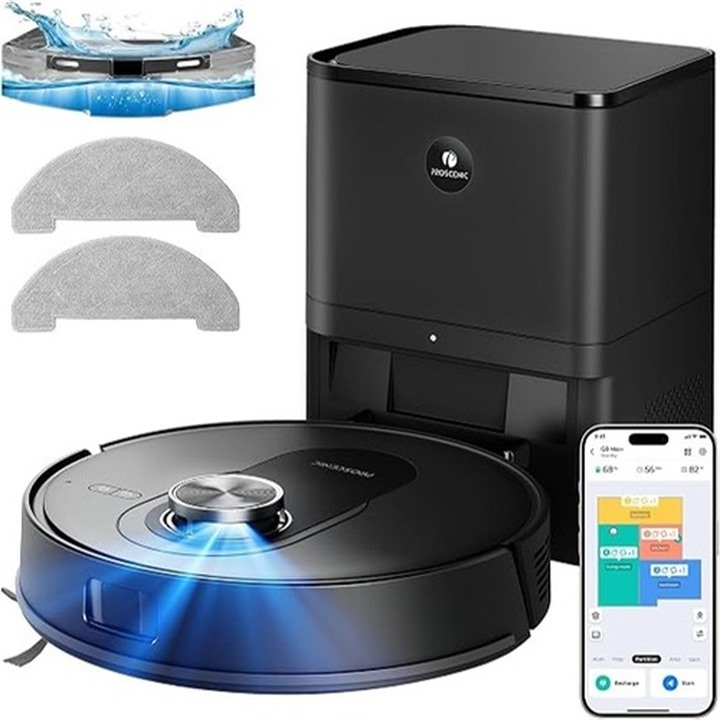
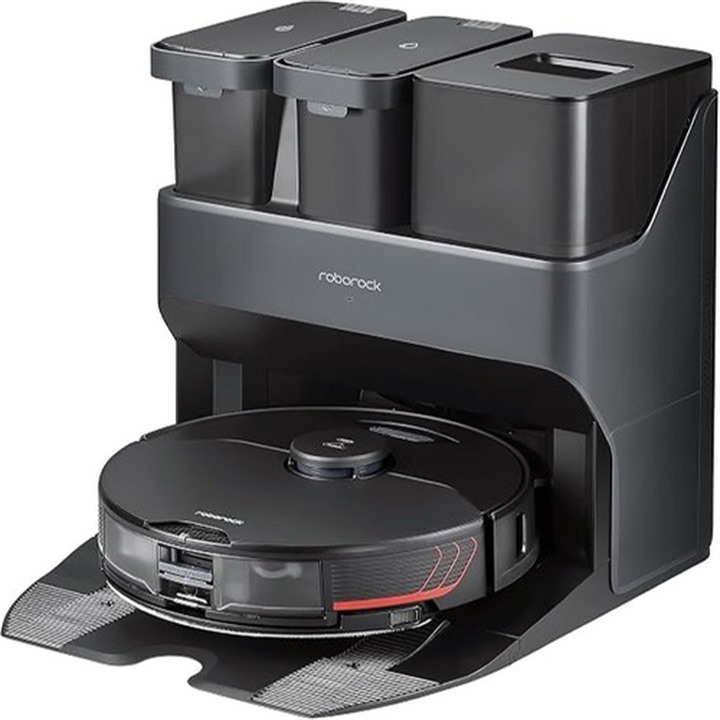
Which robot vacuum and mop to choose in 2026? Five models from €350 to €600,
plus one out of category, compared on the same six criteria — published
weighting, source of every figure stated. These machines were not
lab-tested by the editorial team: the Method section details where every
figure comes from.
By the editorial teamPublished 12 March 2026Reviewed 31 July 2026Read time ~9 min
Affiliate links. As an Amazon Associate, this site earns a
commission on qualifying purchases. This doesn't change the price you pay, nor
the order of the ranking — the scoring grid is published
in the Method section.
Overview
The rankings, sorted by score
Editorial score out of 10, calculated with the weighting published below.
Prices are pulled live from Amazon.co.uk.
C Manufacturer data (public spec sheet) ·
A Synthesis of public reviews ·
E Editors' estimate
Before you compare
The six criteria that really decide
01Navigation: lidar vs camera
A lidar maps the home in real time and navigates even in the dark.
A camera needs light but recognises obstacles — cable, sock,
food bowl — that lidar alone runs into. The ideal combines both.
02Suction power (Pa)
Beyond 5,000 Pa, the gain on hard floors is marginal: brush and mop
do 80% of the work. Power matters mainly on carpets, to extract
embedded pet hair.
03The self-emptying dock
It removes the daily emptying of the bin but introduces a recurring cost:
€15 to €25 for a pack of 3 bags, changed every 2 to 3 months depending on area and
pets.
04Carpets and thresholds
A good robot detects the carpet and lifts its mop by 10 to 15 mm. Also check
the height it can clear: 20 mm is the standard, but a metal threshold bar
can block a robot rated for 18 mm.
05Rotating vs vibrating mop
The rotating one (two pads under pressure) handles dried stains and greasy
marks; the vibrating one, more discreet, is enough for a hallway but not for an
open kitchen.
06Consumables cost
Bags, brushes, HEPA filters: added up over three years, the gap between generic
and proprietary parts can exceed €200. A robot is a disguised
subscription — compare it as such.
The fact sheets
What each robot does well, and what it doesn't
01
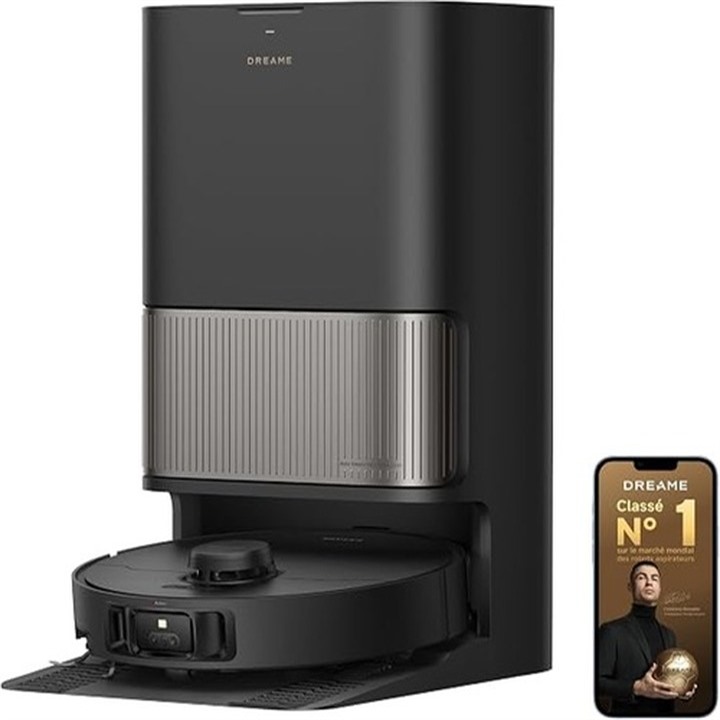
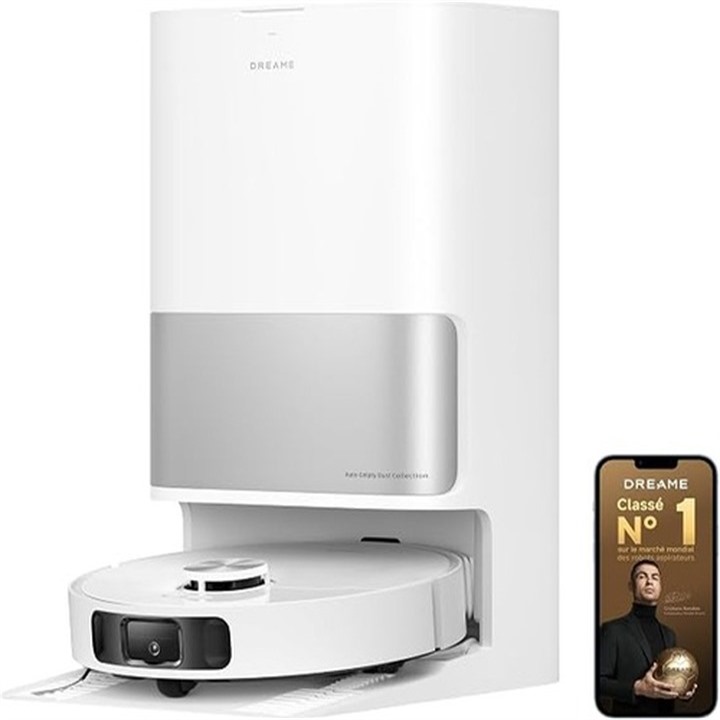
Dreame L40s Pro Ultra
Best for most households
19,000 Pa, an effective anti-tangle brush and a dock that washes the mop pads in hot water then dries them. It's the robot that needs the least daily upkeep, and that's what earns it first place.
Suction C
19,000 Pa (Vormax, 6th-generation TurboForce motor)
Claimed battery life C
195 min
Brush C
DuoBrush HyperStream anti-tangle, bristle + TPU
Dock C
PowerDock all-in-one, emptying up to 100 days
Price on Amazon.co.ukAutomatically pulled via the Amazon API — the price shown on Amazon.co.uk at the time of purchase prevails.
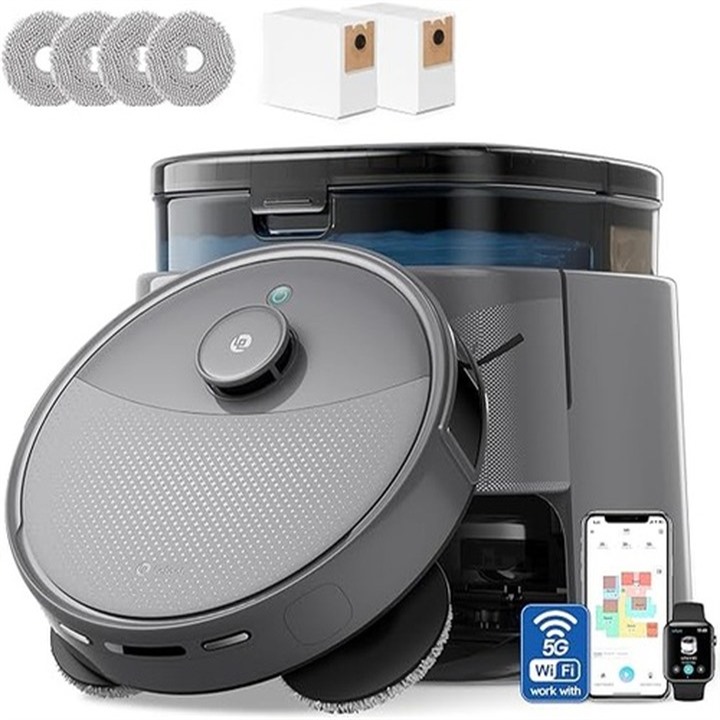
The highest power in the comparison and 220 minutes of battery life, at a price well below the established brands. The trade-off is in the software polish and the unknown of after-sales support.
Suction C
20,000 Pa
Claimed battery life C
220 min
Navigation C
dToF 360° laser (15 m range) + PSD 190° sensors
Mop C
Dual rotating, 200 rpm
Price on Amazon.co.ukAutomatically pulled via the Amazon API — the price shown on Amazon.co.uk at the time of purchase prevails.
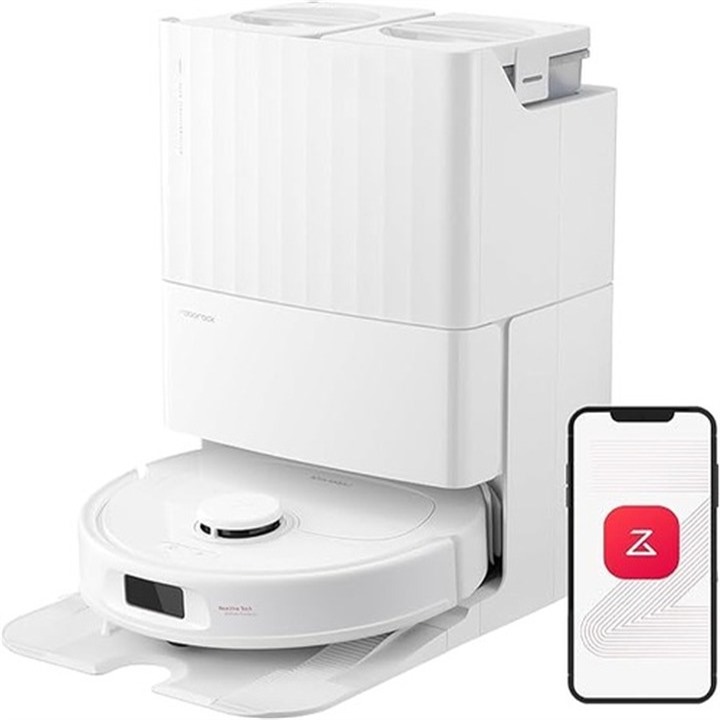
You pay for the brand, but above all you pay for navigation and an app that don't trip over the rug. The extendable mop reaches the edges the others leave.
Suction C
7,000 Pa
Navigation C
PreciSense LiDAR + Reactive Tech, 3D mapping
Mop C
Dual rotating, 200 rpm, extendable for edges
Mop lifting C
Automatic, 10 mm
Price on Amazon.co.ukAutomatically pulled via the Amazon API — the price shown on Amazon.co.uk at the time of purchase prevails.
260 minutes of battery life, the best on the page, an extendable mop for the edges and a dedicated pet mode. It does about 80% of the L40s Pro Ultra's work for much less.
Suction C
10,000 Pa (Vormax)
Claimed battery life C
260 min
Mop C
MopExtend RoboSwing, extends for narrow areas
Dock C
Automatic maintenance up to 75 days
Price on Amazon.co.ukAutomatically pulled via the Amazon API — the price shown on Amazon.co.uk at the time of purchase prevails.
200 minutes and 230 m² claimed, dual-laser LiDAR navigation and an auto-empty that lasts two months. The trade-off is mopping: a vibrating mop, fine daily, insufficient on stains.
Suction C
8,000 Pa, automatic boost on carpets
Claimed battery life C
200 min
Claimed coverage C
230 m²
Battery C
3,200 mAh, automatic resume after recharging
Price on Amazon.co.ukAutomatically pulled via the Amazon API — the price shown on Amazon.co.uk at the time of purchase prevails.
22,000 Pa, a 7.98 cm profile that gets under low furniture, and 3D detection without a turret. Out of category because at this price, you're no longer comparing one vacuum to another.
Suction C
22,000 Pa (HyperForce)
Height C
7.98 cm (3.14-inch profile)
Navigation C
3D detection, no lidar turret
Brush and mop C
FlexiArm offset arm for corners
Price on Amazon.co.ukAutomatically pulled via the Amazon API — the price shown on Amazon.co.uk at the time of purchase prevails.
These robots were not lab-tested by the editorial team, and saying so is
more useful than claiming otherwise. The ranking rests on three sources,
identified by a marker next to every figure:
C public manufacturer spec sheets;
A a synthesis of public reviews and after-sales feedback, kept
only when the same point comes up massively;
E an editors' estimate, to be treated as an order
of magnitude. Prices come from the Amazon API and are refreshed
automatically, with the date of the latest pull shown under each card.
Scoring weighting out of 10
Criterion
What it measures
Weight
Suction quality
Consistency on hard floors and carpets
25%
Battery life and coverage
Area cleaned on one charge
20%
Reliability
Breakdowns, after-sales returns, spare parts
20%
Mopping
Mop effectiveness
15%
App
Mapping, scheduling, bugs
10%
Cost of ownership
Consumables over 3 years
10%
Frequently asked questions
Before you order
What's the best robot vacuum in 2026?
For most households, the Dreame L40s Pro Ultra: 4-in-1 dock,
19,000 Pa, anti-tangle brush, no failed criterion. To maximise power
per euro spent, the Lefant M3 Max. For long-term reliability, the Roborock
Qrevo Plus remains the safe bet.
Robot vacuum: lidar or camera?
Lidar is more reliable and works in the dark. The camera brings
object recognition (cable, sock, pet mess) that lidar alone
can't do. The ideal is a model that combines both, like the L40s Pro Ultra.
A camera-only robot is best avoided in dark homes.
Should you get a self-emptying dock?
Beyond 60 m² or with a pet, yes: emptying the bin every two days
quickly becomes a chore, and a full bin reduces suction. Budget
€40 to €80 per year for bags. For a 30 m² studio without pets, a robot without
a dock is enough.
Does a robot vacuum and mop really replace mopping?
For daily maintenance, yes: footprints, fine dust, small stains.
It doesn't replace a monthly deep manual mop. On greasy
kitchen stains, the rotating mop is clearly more effective than the vibrating one.
If you're still hesitating, take the Dreame L40s Pro Ultra: it's the choice least
likely to disappoint you. If your budget is tight, the L10s Ultra Gen 2
does 80% of the work. And if you're buying to never think about it again, the Saros 10R
isn't aimed at the same buyer: it's an enthusiast's machine, out of the ranking
for that reason.